|
||||||||||||||||||||||||||||

Celebrate Women's History and Deaf History in March and April!History is the theme of this month's newsletter, and the DCMP is here to provide you with the resources to kick off your celebrations of deaf history and women's history. Read on to learn more… 
Description Guidelines Draft Now Available for Public ReviewAs part of the on-going partnership between DCMP and the American Foundation for the Blind (AFB) to develop guidelines for the description of educational media, we'd like to invite individuals involved with educating students who are blind, visually impaired, or deaf-blind to participate in a quick survey. Visit the draft of the guidelines on AFB's Web site to review the progress of the project, and to participate in the survey. Your input will help us to further improve upon the guidelines ahead of their release this September.
Want to Caption Videos for the Web?
If you upload videos to sites such as Google Video and YouTube, you should strongly consider making them accessible to the millions of Web users who can't access spoken dialog, music, and sound effects.
|
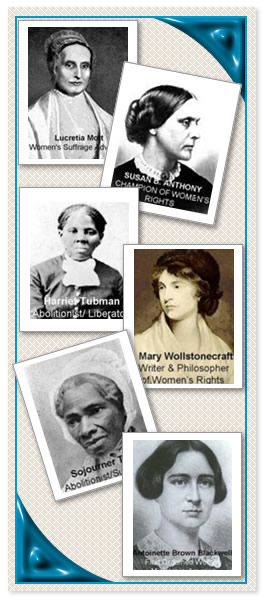
March is Women's History MonthWe kick off Women's History Month with a new article by DCMP Communications Editor, Kelly Gorski, called Women's History Month: Writing Women Back Into History [PDF]. The following is an excerpt from the introduction of the article: Although women have been shaping human history since the dawn of civilization, the concept of Women’s History Month has its roots firmly implanted in the date March 8, 1857, when women from New York City factories protested untenable working conditions. As recently as the 1970s, the influence of women in history was a virtually nonexistent topic in public school curricula or even an element within general public consciousness and discourse. To address this situation, the Education Task Force of the Sonoma County (California) Commission on the Status of Women recognized "Women's History Week" during one week in March in 1978. In 1981 Sen. Orrin Hatch (R-UT) and Rep. Barbara Mikulski (D-MD) cosponsored a joint Congressional resolution proclaiming a national Women's History Week. In 1987 Congress expanded the celebration to a month, and March was declared Women's History Month. Continue reading Women's History Month: Writing Women Back Into History [PDF] for additional perspective on the contributions of famous American women and to help in planning a special Women's History Month celebration for your class or family. You will also want to read Deaf Women United With the DCMP! [PDF], an article written by Linda Merlino Clark, from the Connecticut chapter of the advocacy, education, and outreach group Deaf Women United. Browse the DCMP Media Catalog (Social Sciences > Women-History) for a list of captioned media titles related to women's issues and history. Celebrate Deaf History Month March 13–April 15!
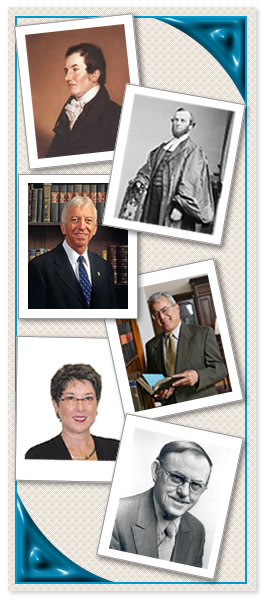
Deaf History Month is celebrated from March 13 through April 15. This is a wonderful opportunity to expand your awareness of the contributions of historical deaf leaders, such as Malcolm Norwood, Larent Clerc, or Thomas Gallaudet, or present-day deaf leaders, such as I. King Jordan, Robert Davila, and Nancy Bloch. March 13 is the anniversary of the victory of the Deaf President Now movement, when Gallaudet University students staged a protest demanding a deaf president for their university. April 8 is another important date; it marks the signing of the Gallaudet University charter by President Abraham Lincoln in 1864. April 15, the last day of Deaf History Month, marks the day The American School for the Deaf in Hartford, Connecticut opened its doors in 1817. The following articles, among the hundreds in DCMP's Clearinghouse of Accessibility Information, should be helpful to you in learning more about, and planning for, your own celebration of Deaf History Month:
Search the DCMP media catalog to see our collection of titles related to deaf history and its notable figures. Many are available instantly via streaming, so there's no reason to wait to begin your celebration of Deaf History Month. Quick Hits for March
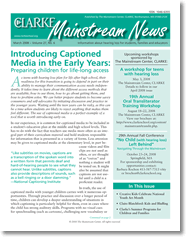
In the March 2008 issue of the Clarke School's "Mainstream News," author and Information Outreach Specialist Melissa Griswold makes the case for captions in the classroom. By encouraging teachers to adopt captioned media early and often in their students' academic careers, Melissa references the varied and proven literacy benefits of captioning, directs readers to programs such as the DCMP, and includes useful tips for teachers and parents. Read Introducing Captioned Media in the Early Years [PDF], reprinted with the author's permission from the Clarke School's "Mainstream News."
With the kick-off of 2008's Read Captions Across America™ last week, we are now counting down the days until the release of 20th Century Fox's adaptation of the Dr. Seuss classic Horton Hears a Who. As we confirmed in January, the film will be released on March 14, and will be available (in select locations) with captions and description by MoPix. (For more information, read the NCAM/MoPix press release.) For accessible showtimes, visit www.mopix.org as the film's release approaches. If you can't get enough Dr. Seuss, or would just like a demonstration of captions and description used in film, check out the accessible Horton Hears a Who trailer. |
|||||||||||||||||||||||||||
|
||||||||||||||||||||||||||||