
The DCMP: A Valuable Resource for Parents
This month's feature article was contributed by Michelle Rich, an educational captionist from Kansas who is also the parent of three children, two of whom have a hearing loss. In her article, Michelle explains her pursuit of equal access for her children, and in doing so, gained both a new perspective and a new career.
Also new this month is an article by DCMP Communications Services Specialist Thom Lohman, which briefly highlights DCMP's services to parents of children who are blind or visually impaired.

In her new article, DCMP Communications Editor Kelly Gorski outlines the use of description in American movie theaters [PDF] and explains how description can bridge the gaps between the visual elements of a production and a viewer who is blind or visually impaired.
(Also, don't miss our article entitled Captioned Movies at Local Theaters [PDF], written by Bill Stark and Teresa Rogers, to learn more about the various ways that movies are made accessible to people who are deaf or hard of hearing!)
We've Added New Titles!
Visit our listing of newly available titles with description AND captioning to check out the new additions to our collection.
|
 |
 |
parents of children who are deaf or hard of hearing:
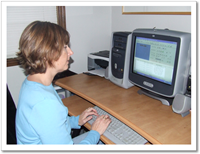
by Michelle Rich
I am the mother of three children: a teenaged son (Kyle) who is profoundly deaf, a preteen daughter (Megan) with moderately severe hearing loss, and a hearing son (Keegan) who just entered kindergarten. My parental journey through an inaccessible world began exactly 14 years ago when my nearly five-year-old son was identified as having a hearing loss, was emboldened when Megan was diagnosed with a hearing loss, and continues today.
As I began to accept the fact that two of my children would not hear, I also started to learn the importance of accessibility in the classroom. Luckily for Kyle, he always had the most amazing teachers who worked hard to assure his academic and social success. I also learned the value of joining a parent group, where my eyes were opened to the benefits of captioning...
|
parents of children who are blind or visually impaired:
by Thom Lohman, DCMP Communications Services Specialist
Written for the National Association for Parents of Children With Visual Impairments (NAPVI) "Awareness" newsletter.
Watching TV with their child who has a visual impairment, parents are accustomed to providing a few words of explanation during the quiet parts: what the laughter was about, a shift in plot when the narration is poor, or why the sitcom’s father was so upset about his daughter’s new dress, for example. Public school teachers have had to do the same, and some students may have even been lucky enough to have a sighted classmate assigned to explain visual content during an educational video or DVD showing.
The DCMP encourages parents and teachers to be active in promoting accessibility for their students. During the Quiet Parts is a primer on the DCMP's services for parents, and includes some ideas about how to get involved in advocating for access.
|
|
The DCMP is a valuable resource for parents, teachers, and others who educate students who are blind, visually impaired, deaf, hard of hearing, or deaf-blind. Contact us, and we'll be glad to answer any questions you may have about accessible media or advocating to make more media accessible to all students!
|
|